Source Alcohol Cooling Rotary Union for Industrial Systems
Find and compare 30 alcohol cooling rotary union options for industrial cooling applications. These units support threaded or flange connections and are available in stainless steel or alloy materials. Buyers can customize sizes and thread standards to fit specific hydraulic or thermal oil systems.
Key considerations
Products List






Comprehensive Sourcing Guide
Alcohol Cooling Rotary Union Sourcing Guide
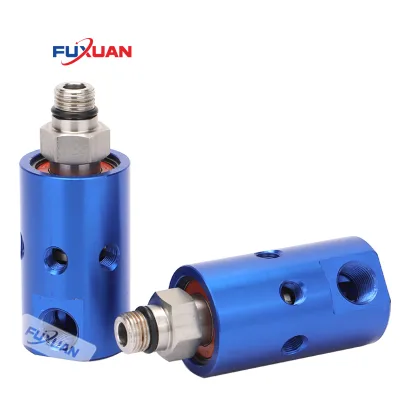
The alcohol cooling rotary union is a critical component designed to transfer fluids like cooling alcohol, water, or thermal oil between stationary and rotating machinery. Based on observed market listings, these units are frequently categorized as multichannel rotary joints or rotary unions capable of handling steam, hydraulic oil, and various gases alongside cooling liquids. Buyers should recognize that while the core function remains fluid transfer, the specific configuration often varies between threaded and flange connection modes to suit different industrial setups.
Procurement decisions for this component hinge on the specific rotation requirements and the medium being transferred. The observed product data indicates that these units support both left and right thread rotations and are available in customized sizes to match existing machinery. When sourcing, it is essential to verify that the selected unit's inner tube connection type—whether rotating or fixed—aligns with the mechanical constraints of the cooling system to prevent leaks or premature wear during operation.
Product Scope and Observed Listing Signals
The market for alcohol cooling rotary unions presents a wide spectrum of product attributes, ranging from basic casting models to complex multichannel systems. Listings frequently identify these items by names such as "Rotary Union," "Steam Rotary Joint," or "Multichannel Rotary Joint," suggesting that a single product listing may cover multiple fluid applications. Buyers must carefully distinguish between general-purpose units and those specifically engineered for the thermal properties of alcohol cooling, as material compatibility and sealing technology can vary significantly across these sub-categories.
Observed listing signals reveal that manufacturers offer extensive customization options, including OEM and ODM support, which allows for tailored solutions to unique production lines. The product scope includes various connection forms such as male threads, flanges, and specific thread standards like NPT, BSP, or MPT, which are often customizable. Additionally, the physical construction often involves stainless steel or alloy materials, with surface treatments ranging from coating and painting to polishing, depending on the environmental conditions of the cooling application.
Technical Specifications to Verify
When evaluating technical specifications, the primary focus must be on the material composition and the maximum operational speed. The supplied data indicates that units are constructed from materials such as stainless steel, carbon steel, and various alloys, each offering different resistance to corrosion and thermal stress. For alcohol cooling applications, verifying that the internal seals and body materials are compatible with the specific chemical properties of the alcohol is vital to prevent degradation or leakage under pressure.
Speed and connection integrity are equally critical parameters that require strict verification. Listings show a maximum speed of 100rpm for certain models, but this figure is not universal and must be confirmed against the specific requirements of the rotating equipment. Buyers should also scrutinize the thread standard and connection mode, ensuring that the unit supports the required threaded or flange connections and that the thread rotation (left or right) matches the machinery's direction of rotation to ensure proper assembly and function.
Compliance and Safety Documentation
Compliance documentation for rotary unions typically centers on manufacturing process certifications and quality control standards. The observed product data highlights ISO and CE certifications, with some listings specifically mentioning ISO 9001 standards for manufacturing processes. While these certifications indicate a commitment to quality management, buyers should request specific documentation proving that the production of the rotary union adheres to these standards, particularly regarding the forging or casting processes used to create the unit's body.
Safety verification extends to the inspection protocols employed by the supplier before the product leaves the factory. Trusted category knowledge suggests that high-quality suppliers perform 100% inspection before packing to ensure dimensional accuracy and sealing integrity. Buyers should explicitly request inspection reports or certificates of conformity that detail the testing performed on the rotary union, ensuring that the unit meets the necessary safety requirements for handling pressurized fluids in an industrial cooling environment.
Cost Drivers and Commercial Terms
The cost of an alcohol cooling rotary union is heavily influenced by the level of customization and the complexity of the internal channel design. Listings indicate that prices can range significantly, from low-cost standard units to high-value multichannel systems, with the observed range spanning from $3 to $500,000. This variance is driven by factors such as the material grade, the number of fluid channels, and the specific surface treatments required to withstand the cooling medium and operating conditions.
Commercial terms regarding minimum order quantities (MOQ) and packaging are also key cost drivers in the procurement process. The observed data shows an MOQ range of 1 to 10 units, offering flexibility for both small-scale testing and larger production runs. Packaging options vary from standard export cartons to durable wooden cases, and the choice of packaging can impact shipping costs and the protection of the unit during transit. Buyers should negotiate these terms based on their specific volume needs and the fragility of the equipment.
Supplier Qualification and Quality Control
Supplier qualification for rotary unions requires a deep dive into their manufacturing capabilities and quality assurance processes. The observed listings reveal that suppliers utilize processes such as casting and forging, with some employing CNC machining for precision. Buyers should verify the supplier's ability to provide customized sizes and thread standards, as this flexibility is often a marker of a mature manufacturing operation capable of meeting diverse industrial needs.
Quality control is a decisive factor in selecting a reliable supplier for critical fluid transfer components. The data confirms that many suppliers implement rigorous inspection protocols, including 100% inspection prior to packing. To ensure long-term reliability, buyers should assess the supplier's track record in maintaining these standards and their willingness to provide detailed quality reports. Additionally, the availability of OEM and ODM support indicates a supplier's capacity to adapt their quality control measures to specific buyer requirements.
Long-Term Procurement Checks
Long-term procurement success depends on establishing a robust relationship with suppliers who can support ongoing maintenance and part replacement. The observed product data highlights that suppliers offer customized support, which is essential for adapting to future changes in machinery or cooling requirements. Buyers should prioritize suppliers who demonstrate a commitment to continuous improvement and can provide technical assistance for troubleshooting or upgrading their rotary union systems.
Sustainability and supply chain stability are also critical considerations for long-term procurement. The origin of these products, often listed as Shandong, China, suggests a concentrated manufacturing hub that buyers should monitor for potential supply chain disruptions. Establishing clear communication channels and verifying the supplier's ability to maintain consistent quality over time will ensure that the alcohol cooling rotary unions remain a reliable component in the production line, minimizing downtime and operational risks.
FAQs
What materials are used for alcohol cooling rotary unions?
These rotary unions are typically manufactured from stainless steel, alloy, or carbon steel to ensure durability and corrosion resistance. The choice of material depends on the specific fluid compatibility and operating pressure requirements. Manufacturers offer customized sizes and thread standards such as NPT, BSP, or MPT to fit various industrial applications effectively.
Can I customize the size and connection type of the union?
Yes, customization is available for both size and connection modes. Buyers can select from threaded connections or flange connections based on their system needs. The product supports OEM and ODM services, allowing for tailored specifications including customized thread rotation directions and inner tube connection types to match precise engineering requirements.
What certifications do these rotary unions hold?
The products generally hold ISO and CE certifications, ensuring compliance with international quality and safety standards. Some manufacturing processes may also adhere to ISO 9001 standards for quality control. These certifications verify that the production meets rigorous international benchmarks for reliability and performance in industrial fluid transfer applications.
What is the minimum order quantity for these products?
The minimum order quantity is typically one piece, allowing for flexible purchasing for testing or small-scale projects. This low MOQ facilitates easier procurement for buyers who need specific configurations without committing to large bulk orders. It supports both standard and customized requests with minimal initial investment barriers.
How are these rotary unions packaged for shipping?
Products are packaged in export cartons, wooden cases, or standard durable cardboard boxes to ensure safe transit. The packaging is designed to protect the mechanical components from damage during international shipping. Standard export packaging practices are employed to maintain product integrity until they reach the buyer's facility for installation.
What fluids can these rotary unions handle?
These unions are designed to handle various fluids including steam, water, thermal oil, hydraulic oil, gas, and alcohol. The internal sealing and material construction ensure leak-free performance across different media types. This versatility makes them suitable for diverse industrial cooling and heating applications requiring reliable rotary fluid transfer.